
This is a profoundly useful and provocative perspective. Companies like FB, Twitter, Instagram and Google leverage this fact to employ a ‘man in the middle’ gambit which effectively invents and collects vast resources from the everyday electronic activities of users, who are usually punished or simply go unrewarded for their passive participation. I have developed a model of a system that would radically invert this paradigm, and deliver the value and intelligence assets first to the users, and then magnify the impact and usefulness of the results by leveraging group linkage to create astonishing opportunities to learn, form relationships, and solve problems together. I call it ‘The Knowledge Amp’. This model would employ human-assisted computational paradigms to transform how we relate with information, learning, health, finances and opportunities… as individuals, groups and cultures. “In his book »Where Good Ideas Come From, Steven Johnson demonstrates that connectedness between normally isolated people and ideas is the primary engine of innovation across history. The relationships you choose to develop decide which ideas and opportunities present themselves to you. If you spend time with only the same people, who spend time only with you, chances are you are going to know the same things, talk about the same things, and like the same things. But if instead you make friends with people who aren’t in your group, you get access to all kinds of new information, resources, and opinions. Ronald S. Burt, the sociologist who pioneered this idea, says it this way: “Resources flow disproportionately to people who provide indirect connections between otherwise disproportionate groups.” Francis says it a bit more plainly: “You have to increase your luck surface area.” — from: Get Backed, Evan Baehr, Evan Loomis
This is a profoundly useful and provocative perspective. Companies like FB, Twitter, Instagram and Google leverage this fact to employ a ‘man in the middle’ gambit which effectively invents and collects vast resources from the everyday electronic activities of users, who are usually punished or simply go unrewarded for their passive participation.
I have developed a model of a system that would radically invert this paradigm, and deliver the value and intelligence assets first to the users, and then magnify the impact and usefulness of the results by leveraging group linkage to create astonishing opportunities to learn, form relationships, and solve problems together. I call it ‘The Knowledge Amp’. This model would employ human-assisted computational paradigms to transform how we relate with information, learning, health, finances and opportunities… as individuals, groups and cultures.
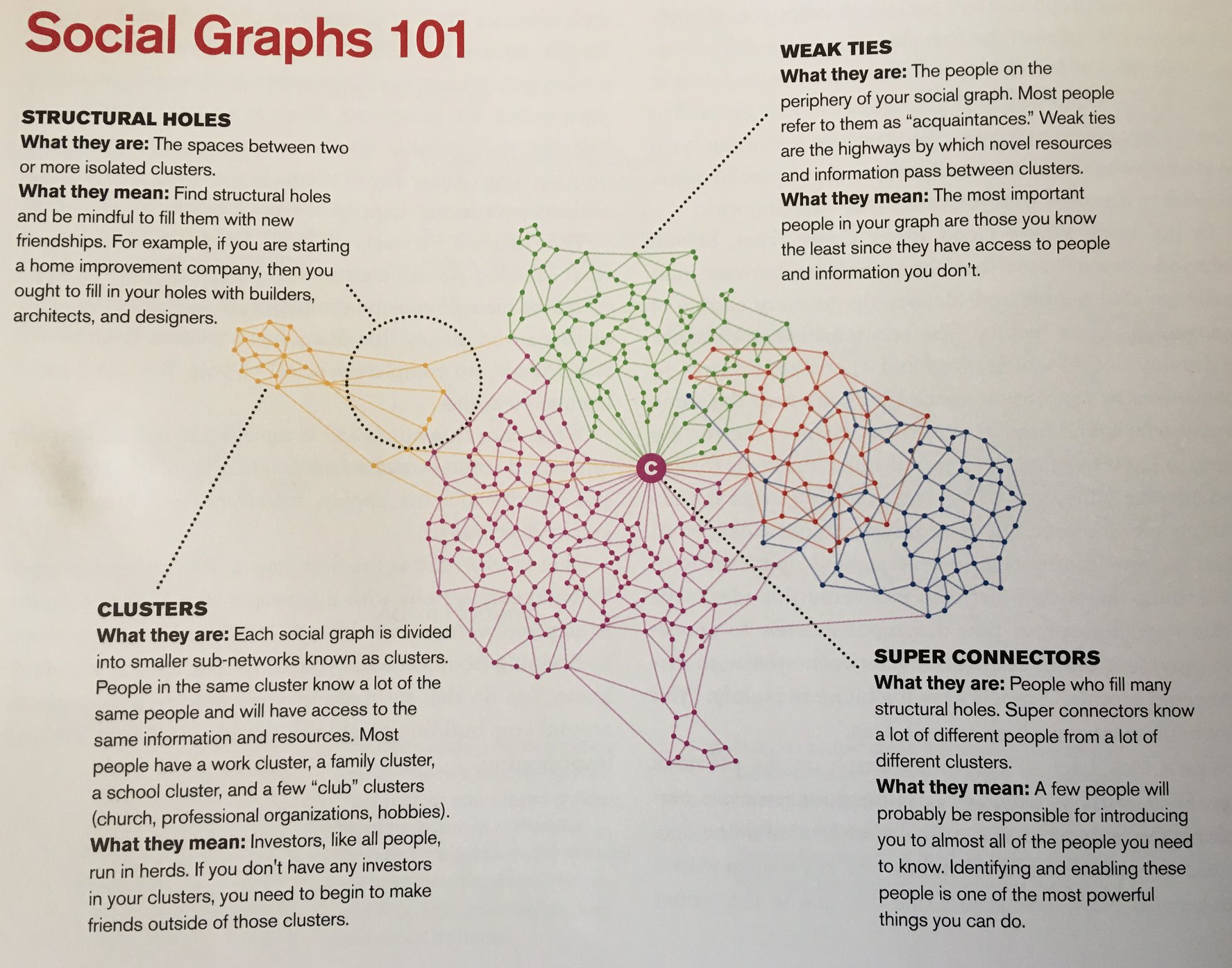
“In his book »Where Good Ideas Come From, Steven Johnson demonstrates that connectedness between normally isolated people and ideas is the primary engine of innovation across history. The relationships you choose to develop decide which ideas and opportunities present themselves to you. If you spend time with only the same people, who spend time only with you, chances are you are going to know the same things, talk about the same things, and like the same things. But if instead you make friends with people who aren’t in your group, you get access to all kinds of new information, resources, and opinions. Ronald S. Burt, the sociologist who pioneered this idea, says it this way: “Resources flow disproportionately to people who provide indirect connections between otherwise disproportionate groups.” Francis says it a bit more plainly: “You have to increase your luck surface area.”
— from: Get Backed, Evan Baehr, Evan Loomis
0 Comments