
Lessons from the Living: Young Worm Vs Older Phase Worms: Escaping the trap imposed by a frozen idea of ‘up’. Or that ‘ascent is good’, and ‘descent is undesirable’. So I have been de-worming my sage plant by hand with a toothpick. The worms are hard to find, but the latter-stage worms are easier to locate due to their brown color. Today I found a younger (green) phase worm. I place them in a shotglass and take them outside to a garden where they can continue their life. Here’s the interesting thing. The latter-stage worms have been circling the top of the glass for quite some time (presently: half an hour). The younger worm never did this even once. It climbed the glass, ‘fell off the lip’ to the outside, and lowered itself down to the table. It was long gone within that time, having traveled nearly a foot away from the glass to find a sage leaf I had placed on the table. It took shelter within the old leaf. The older worms sometimes ‘fall off the edge’ (to the outside) of the lip, and then just climb back up to the lip (they can make silk a bit like spiders). So every time they nearly escape the glass, they simply re-ascend to ‘what they consider to be ‘up’ or ‘the top’ ‘ See the problem here? The younger worm has no such distractions or frameworks. It left the glass, and escaped the trap »on the first attempt. It even found the right kind of leaf on the broad surface of the circular table where the glass was placed at the center. By the way, the moment I put the leaf with the young worm back in the glass? It left the shelter of the leaf and immediately began the process of escape again. Lessons from the living: youth can lead elders out of traps they are stuck repeating. Fast, too. If they can take the lesson. Here’s hoping I can.
Lessons from the Living:
Young Worm Vs Older Phase Worms: Escaping the trap imposed by a frozen idea of ‘up’. Or that ‘ascent is good’, and ‘descent is undesirable’.
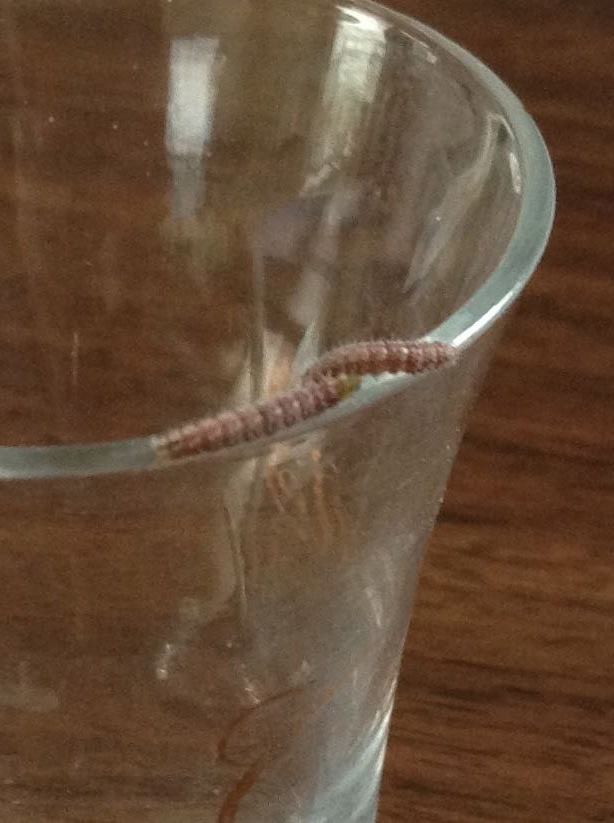
So I have been de-worming my sage plant by hand with a toothpick. The worms are hard to find, but the latter-stage worms are easier to locate due to their brown color. Today I found a younger (green) phase worm. I place them in a shotglass and take them outside to a garden where they can continue their life.
Here’s the interesting thing.
The latter-stage worms have been circling the top of the glass for quite some time (presently: half an hour). The younger worm never did this even once. It climbed the glass, ‘fell off the lip’ to the outside, and lowered itself down to the table. It was long gone within that time, having traveled nearly a foot away from the glass to find a sage leaf I had placed on the table. It took shelter within the old leaf.
The older worms sometimes ‘fall off the edge’ (to the outside) of the lip, and then just climb back up to the lip (they can make silk a bit like spiders). So every time they nearly escape the glass, they simply re-ascend to ‘what they consider to be ‘up’ or ‘the top’ ‘
See the problem here?
The younger worm has no such distractions or frameworks. It left the glass, and escaped the trap »on the first attempt. It even found the right kind of leaf on the broad surface of the circular table where the glass was placed at the center.
By the way, the moment I put the leaf with the young worm back in the glass? It left the shelter of the leaf and immediately began the process of escape again.
Lessons from the living: youth can lead elders out of traps they are stuck repeating. Fast, too. If they can take the lesson.
Here’s hoping I can.
0 Comments