
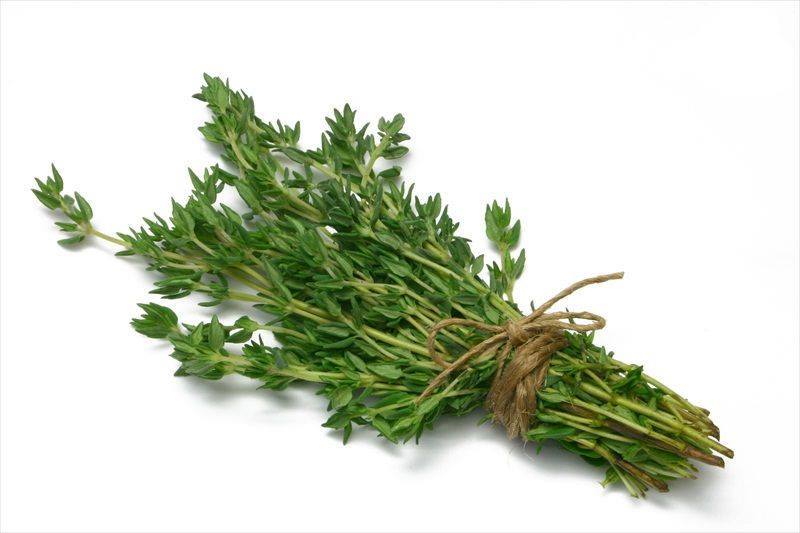
Herbal wisdom via Herbalist/Witch @[100003619947738:2048:Robin Artisson]: “Suffering infectuous or dry coughs? Whooping coughs? Bronchitis? Sore gums? Sore throats? Laryngitis? Poor appetite? Bronchial spasms? That unfortunate tendency to flatulence beyond what you’re comfortable with? Even lung discomforts related to emphysema or asthma? Just about any inflammation of the upper respiratory tract? Your relief comes all in good thyme. Thyme is really everywhere. It grows easy, with little effort, just about anywhere. It’s available just about anywhere, fresh or dried- every supermarket here has it dried and fresh. It makes nearly any dish taste better. An aromatic stimulant, and a carminative, its uses are endless. Even “WebMD” has to admit: “Early research suggests thyme, in combination with cowslip (Bronchipret), relieves symptoms of bronchitis such as coughing, fever, and increased production of sputum.” Eriodicytol, a flavonoid in its leaves, is strongly antioxidant. The whole herb is a powerful antiseptic, and its tinctures or infusions can be used to disinfect cuts and prevent infection of the throat or lungs. The oil of thyme has been shown to be antispasmodic, expectorant, antimicrobial, and to lower arterial pressure. It increases heart rhythm, and respiratory volume. It lowers blood pressure, and relieves toothaches. The list just never ends. Thyme’s essential oil will sometimes irritate the skin, but it is non-toxic internally; all the same, it should be diluted well, even for external use. Thyme can also slow down blood clotting, which might not be something people with clotting disorders want or need. To make an infusion of it with boiling water, you only need 5 grams (about one heaping teaspoon) of the fresh leaves, or as much of the dried herb as will make up a level teaspoon. 5-10 minutes with a cup (or less) of boiling water poured over it, and then strained and sweetened with a teaspoon of honey, and you’re in business. This may be the oldest known “cough syrup” ever made- but taken daily, it has a bevy of other positive effects on you. Pregnant and nursing women, and anyone with real heart problems might want to avoid it at anything other than food amounts.”
Herbal wisdom via Herbalist/Witch Robin Artisson:
“Suffering infectuous or dry coughs? Whooping coughs? Bronchitis? Sore gums? Sore throats? Laryngitis? Poor appetite? Bronchial spasms? That unfortunate tendency to flatulence beyond what you’re comfortable with? Even lung discomforts related to emphysema or asthma? Just about any inflammation of the upper respiratory tract? Your relief comes all in good thyme.
Thyme is really everywhere. It grows easy, with little effort, just about anywhere. It’s available just about anywhere, fresh or dried- every supermarket here has it dried and fresh. It makes nearly any dish taste better. An aromatic stimulant, and a carminative, its uses are endless. Even “WebMD” has to admit: “Early research suggests thyme, in combination with cowslip (Bronchipret), relieves symptoms of bronchitis such as coughing, fever, and increased production of sputum.”
Eriodicytol, a flavonoid in its leaves, is strongly antioxidant. The whole herb is a powerful antiseptic, and its tinctures or infusions can be used to disinfect cuts and prevent infection of the throat or lungs.
The oil of thyme has been shown to be antispasmodic, expectorant, antimicrobial, and to lower arterial pressure. It increases heart rhythm, and respiratory volume. It lowers blood pressure, and relieves toothaches. The list just never ends. Thyme’s essential oil will sometimes irritate the skin, but it is non-toxic internally; all the same, it should be diluted well, even for external use. Thyme can also slow down blood clotting, which might not be something people with clotting disorders want or need.
To make an infusion of it with boiling water, you only need 5 grams (about one heaping teaspoon) of the fresh leaves, or as much of the dried herb as will make up a level teaspoon. 5-10 minutes with a cup (or less) of boiling water poured over it, and then strained and sweetened with a teaspoon of honey, and you’re in business. This may be the oldest known “cough syrup” ever made- but taken daily, it has a bevy of other positive effects on you. Pregnant and nursing women, and anyone with real heart problems might want to avoid it at anything other than food amounts.”
0 Comments